
2026 2nd International Conference on Bridge & Tunnel Construction and Engineering (BTCE 2026)

Prof. Qinxi Dong
Shandong Jiaotong University
Biography:Dr. Qinxin Dong is a professor at Hainan University, PhD supervisor, Foreign Fellow of the Engineering Academy of Japan, Fellow of the Japan Society of Civil Engineers. He received his Bachelor’s degree in Solid Mechanics from the School of Aerospace at Beijing Institute of Technology in 1986, a Master’s degree in Computational Mechanics from the same university in 1989, and a PhD degree in Science and Technology in Computational Mechanics from the University of Innsbruck in Austria in 1997. From 1998 to 2000, he conducted postdoctoral research at the Japan Society for the Promotion of Science (JSPS).Dr. Dong has over 35 years of experience in the research and development of CAE (Computer-Aided Engineering) industrial software across multi-field coupling systems. He is proficient in the core algorithms and data storage formats of scientific computing industrial software from Europe and the United States, capable of interpreting and modifying industrial software source codes. He has long been dedicated to research on supercomputing algorithms and large-scale data storage in supercomputing environments. He develops a supercomputing support software platform with independent intellectual property rights and has successfully applied his research findings to the analysis and simulation of seismic engineering, engineering geology, fluid mechanics, multi-field coupling, intelligent manufacturing, and the formation and effects of new composite materials, resulting in a comprehensive suite of engineering application systems, with supercomputing algorithm optimization, supercomputing software support, and big data analysis. The exascale supercomputing software developed by Prof. Dong has become one of the irreplaceable support tools in Japan for disaster prevention and mitigation engineering.
Title:Digital and Intelligent Supercomputing Simulation Empowers Intelligent Construction
Abstract:The proactive development of new infrastructure must be underpinned by a first-class digital foundation, with intelligent computing centers serving as the “super brain” for the digital and intelligent upgrading intelligent construction. With supercomputing entering the exascale era (1018 Floating-point Operations Per Second,FLOPS), developed countries have formulated strategic measures to engage in related research, and at the same time supercomputing is facing a new wave of huge challenges. Based on supercomputing algorithms and the supporting software they generate, this talk provides a brief introduction to data structures, parallel processing methods, data exchange, simulation implementation, etc. Particular emphasis is placed on research and applications in the service safety, durability, and seismic performance of intelligent construction structures.
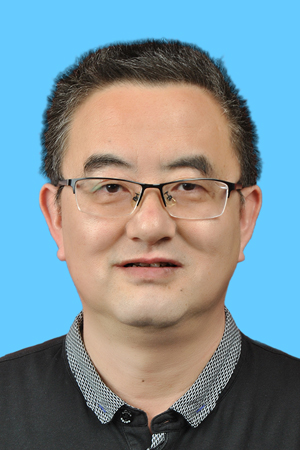
Prof.Yuanqing Wang
Chang’an University
Biography: Yuanqing Wang is currently a second-level professor and doctoral supervisor at Chang’an University, serving as the Chair of the Department of Traffic Engineering and Director of the BRT Research Center at Chang’an University. He also holds the positions of Vice Chairman of the Urban Transportation Branch of the China Highway Society, Chairman of the Academic Committee of the Transportation Planning Branch of the China Highway Society, member of the Technical Committee of the National Passenger Standards Committee, expert reviewer for science and technology awards of the Ministry of Public Security, expert in soft science research for the Ministry of Transport, expert for the Safety Committees of Shaanxi Province and Xi’an City, and advisor to the Planning Committee of the Xi’an High-tech Zone.
His research areas include transportation planning and management, intelligent transportation, and low-carbon transportation.
Abstract: Analyzing the opportunities and challenges of the green transformation of bridge construction, maintenance, and operation from four aspects: the evolution of bridge 'dual carbon', road traffic carbon accounting methodology, research and findings on carbon accounting in the transportation sector, and the development outlook for the '15th Five-Year Plan'.

Prof. Jianbing Lv
Guangdong University of Technology
Biography: Prof. Jianbing Lv currently serves as the Deputy Director of the Tunnel Construction Management and Youth Work Forum Committee under the Tunnel and Underground Engineering Division of the China Civil Engineering Society, a Council Member of the Guangdong Highway Society, an expert in the Road section of the World Transport Congress (WTC), a member of the Geotechnical Subcommittee of the Guangdong Highway Society, as well as a Council Member and Expert Consultant of the Guangdong Transportation Construction Supervision and Testing Association. He is also a senior-level expert listed in the evaluation pools for both Guangzhou Transportation Series and Guangzhou Construction Series.
Since 2001, he has been engaged in longitudinal scientific research, industry-university-research collaborations, testing, and design in the fields of road engineering, tunnels, and slopes, as well as collaborative research and testing projects for urban subways and high-speed rail. He specializes in integrating theory with practice in industry-university-research projects related to road engineering, tunnels, and slopes.
He has been awarded the Guangdong Provincial Science and Technology Second Prize once, and the China Highway Society Science and Technology Second and Third Prizes once each. He has presided over and participated in the formulation of one Ministry of Transport industry standard and three Guangdong provincial local standards. During his career, he has published more than 50 papers, including 15 indexed by SCI, 10 indexed by EI, and over 20 in nationally recognized Chinese core journals (CSCD). He holds six patents and currently serves as a reviewer for multiple foreign SCI journals and as a reviewer for the English version of the national Chinese core journal "Tunnel Construction."
Title: Research on Rapid Assessment and Emergency Response Technology for Highway Slope Disasters Integrating Multi-source Sensing and Deep Learning
Abstract: To address the limitations of conventional highway slope hazard management, including heavy reliance on manual inspection, low assessment efficiency, fragmented monitoring data, and delayed warning response, this study develops a rapid assessment and emergency response technology system for highway slope hazards by integrating multi-source sensing and deep learning. Focusing on disease identification, stability prediction, intelligent monitoring, and emergency management of highway slopes, a multi-source slope database was established by incorporating UAV imagery, InSAR satellite remote sensing, GNSS deformation monitoring, deep displacement, structural stress, pore water pressure, water pressure, earth pressure, and digital twin-derived geotechnical parameters. On this basis, intelligent analysis models for slope defect recognition and safety evaluation were developed using AlexNet, ResNet-18, and 1-D CNN, together with transfer learning, sample augmentation, and multi-source data fusion strategies. Meanwhile, a space-air-ground integrated monitoring framework was constructed, and an intelligent monitoring and emergency response platform for highway slopes was developed to realize spatiotemporal data integration, hazard evolution diagnosis, rapid warning, and decision support. The results show that the proposed technical system can significantly improve the accuracy, timeliness, and intelligence level of slope hazard identification and risk assessment. Pilot applications on typical expressway slope projects demonstrated effective early warning 24–48 hours in advance, reduced manual inspection frequency, and lowered the risk of missed detection. The proposed system therefore exhibits strong engineering applicability, scalability, and practical value.